No pain no gain?

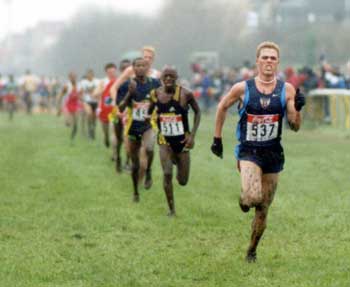
I’ve spent a lot of time recently thinking about the impending Marathon which is now 20 days away – not that anyone’s counting.  How the heck I am actually going to run 26.2 miles is beyond me.  Some people say that it’s a lot easier if you think about it in increments (four 5 milers, and then a six-mile run with whatever you have left).  But regardless of how I think about the run,  I know that it’s going to hurt.  A lot.  And no matter how much you prepare yourself, you cannot prepare yourself for the pain that your body feels around mile 20 when you’ve run out of gas.

This morning I was perusing the health section of the New York Times when I chanced upon this SUPER interesting article on how professional athletes are so good because they are able to push past the pain (http://well.blogs.nytimes.com/2010/10/18/pushing-past-pain-to-improve-performance/?ref=health).  Mary Wittenberg, president of New York Road Runners states, “Mental tenacity — and the ability to manage and even thrive on and push through pain — is a key segregator between the mortals and immortals in running.”  Granted, we aren’t elite athletes that are vying for medals, but the article goes on to argue that even mere mortals can benefit from training your brain to endure pain.

One of the most interesting takeaways from this article is that elite athletes focus on the activity that they are doing rather than trying to take their minds off of it.  Dr. Jeroen Swart, a sports medicine physician who has done research on this topic states, “Our hypothesis is that elite athletes are able to motivate themselves continuously and are able to run the gantlet between pushing too hard — and failing to finish — and underperforming.”

So whether you’re climbing a grueling hill in spinning class, swimming your 20th lap, or running intervals around a track, rather than trying to take your mind off of the discomfort of the activity, focusing on your form, your surroundings and your competitors may help you improve your performance.  Or at the very least, help you get through the end in one piece!
Important PSA that may save your life

Hey folks.  So today I’m writing about something that has nothing to do with nutrition — but honestly I feel so traumatized that I had to say something.

This morning, I went out for a short run on the West Side Highway.  I was just hitting my stride 5 minutes in, when I saw in front of me a woman lying on the ground and a young man holding a bike.  As I approached I could hear her screaming in pain.  I saw in the distance some construction workers looking on.  I got closer and asked what was going on and the guy told me that she was running and he was crossing the bikepath too fast and ran into her.  I got closer and looked at her arm, and the bike appeared to be attached somehow, then she tryed to touch it and screamed “I think the brake pedal went through my arm.”  I didn’t want to touch her arm for fear of damaging something, but it was very clear that the brake pedal was stuck in it, and although she wasn’t bleeding, this was incredibly serious.  I yelled to one of the construction workers to call 911.  Another biker stopped and tried to detach the rest of the bike from her while we held the bike steady.  We stood there for 15 minutes, trying to keep her calm and waited until emergency services got there.  Two firetrucks and two ambulances came and swarmed on the path, and we stepped aside to let the professionals take over.  They managed to saw the handlebars from the bike, so they could take her to the hospital with the brake pedal in her arm.  After I spoke to some police they took her away.  The brake pedal had punctured her brachial artery.  I hope to God that she is ok.

I am writing because this can happen to anyone.  We all need to be aware of ourselves and our surroundings.  Bikers — always watch the path, be aware of signs (especially the yellow yield ones), and know the rules of the road.  Runners — it’s so easy to tune out your surroundings with music blaring in your ears, but always obey the rules of the road and keep your eyes open.

After the accident, I continued on my run, shaking the whole time, and thanking God for every step I took.  Two seconds earlier that could’ve been me.

The perfect vegetable

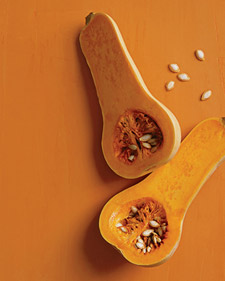
With this fall weather in the air, I’ve been craving one of my favorite foods — butternut squash.  It is by far my favorite vegetable (although it is TECHNICALLY a fruit because it has seeds).  While my Dad may disagree with me on this one, preferring his orange cheez-its, the tangerine flesh of butternut squash is a nutritional powerhouse.  It provides plenty of dietary fiber, vitamin C, it is also provides significant amounts of potassium, good for muscle recovery and bone health.  Perhaps its most significant health benefit is that it provides beta-carotene, a vitamin that is shown to enhance immunity and guard against various types of cancer.  Pretty sweet, huh?

Butternut squash is great in soups, stews,  mashed up (like potatoes), and thrown into pastas.  But my favorite way to make it is roasting, which brings out it’s delicious sweet flavor.

Skinny roasted squash:

Preheat oven to 400 degrees.

Take 1 butternut squash, cubed into one inch pieces.  Toss pieces in a baking dish covered with cooking spray.

Add 1 tsp walnut oil and 2 tsp brown sugar.  Add salt and pepper (just eyeball it).  I usually throw a little more cooking spray just to coat all the pieces and toss them around to make sure all the different ingredients coat the squash.

Pop these little suckers in the oven for 30 minutes or until browned and tender (make sure to flip them at the 15 min mark)

Enjoy a a side dish, in salads (I make a mean butternut squash, goat cheese and chickpea salad), or as a delicious snack!

Our diets, our selves

Every night before I go to sleep, I brush my teeth, read a book, and write in my journal.  My food journal.

Sounds a little odd right?  But let me let you in on a little secret — food journaling helped me lose  almost 40 pounds and is probably one of the most effective and least expensive weight loss tools that I know.  In fact, a weight loss study conducted by the Kaiser Permanent Center for Health Research found that “participants who kept a food journal lost almost double the weight of their nonjournaling counterparts”.  Food journaling was the single best predictor of whether participants in this study would lose weight, trumping exercise habits, age, and body mass index!

If you’re looking to lose 40, 20, or even 5 pounds, food diaries can be incredibly powerful because not only do you get a sense of what you’re eating during the day and can make more balanced choices, it provides a sense of accountability.  So if you eat that chocolate chip cookie at lunch, it counts!  The trick to food diaries is that you be as HONEST as possible.  Eating with a purpose — that you’re hungry, becomes more of a focus, rather than mindlessly munching throughout the day.  Food diaries are also great if you have any digestive problems or energy issues because they can give you a great sense of what foods upset your stomach, how satisfying things were, and how much energy you gained from having eaten them.

So how do you start keeping a food diary?  Keith Bachman, MD, describes the process quite well, “Keeping a food diary doesn’t have to be a formal thing. Just the act of scribbling down what you eat on a Post-It note, sending yourself e-mails tallying each meal, or sending yourself a text message will suffice. It’s the process of reflecting on what you eat that helps us become aware of our habits, and hopefully change our behavior.”

The simple act of becoming more aware of what you’re eating can help you reevaluate your diet and make healthier choices.  Furthermore, food journaling can help you understand the circumstances which may cause you to pig out or eat unhealthily (stress, sitting close to a vending machine at work, etc..) and help you to combat those circumstances.

While I don’t write in a food journal regularly anymore, from time to time when I feel like I’ve been making unhealthy choices I’ll scribble my meals down for a couple days to get back on track.  Food journaling isn’t about obsessively detailing every morsel you put in your mouth, it’s about getting a general sense of your diet and finding constructive ways to improve it.  It’s about recognizing your pitfalls and celebrating your strengths and taking control of your food choices, one day at a time.

GS Obsessed

I’m taking this post to share with you some amazing things that are in my pantry that you might become obsessed with also.  Everyone has foods that they can’t go a day without.  If I was stuck on a dessert island this is what I would take with me (along with some fage  0% greek yogurt and a spoon)

Galeo’s Miso Caesar Dressing

This stuff is a like a dream come true.  It’s this amazingly creamy, caesary, asian flavor, with only 14 calories in a tablespoon!!  The miso flavor is not overwhelming and it tastes good on everything.  And I mean EVERYTHING.  I put it on salads, dip raw veggies into it, put it on veggie burgers and hamburger buns.  When the whole foods in tribeca was out of this stuff, I literally scoured every whole foods in the local vicinity so i could stock up again.  Yea I know…obsessed.

American Spoon Pumpkin Butter

While I’ve never been a big jam person…this stuff literally tastes like pumpkin pie in a jar.  In the mornings, I’ll spoon a little into my greek yogurt — it sounds a little odd, but literally tastes like a pumpkin pie yogurt parfait explosion of deliciousness.  It’s also quite delicious on whole wheat toast and lowfat vanilla frozen yogurt.  And to top it off, there are no added preservatives or other yucky things that other jams have — it’s just pumpkin, maple syrup, and spices.  Yum!

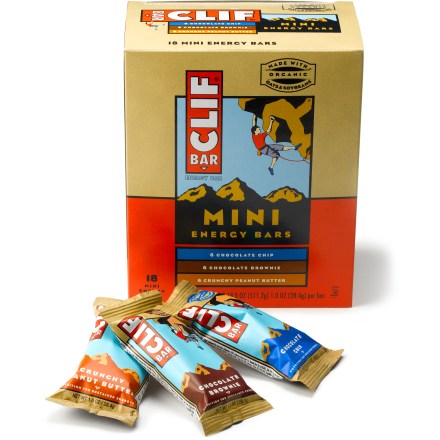
Mini CLIF bars

A couple weeks ago I was sitting in class, when one of my classmates whipped out one of these bad boys and started eating.  I was astonished.  Mini clif bars??  What is this nonsense?  Usually Clif bars are ginormous energy bars that are not exactly what I need on an average day.  However, as my runs for the marathon keep getting longer…I was hoping to find something to eat along the way that would keep me going, but not make me want to puke (powerbar energy gels are disgusting!).  I picked up a box of these babies (100, 110 calories each).  Not only do that fit perfectly in my running belt, they make a perfect, portion-controlled snack when you need a quick energy boost.

Yogi Ginger Tea

As someone who is always freezing, tea is an important staple in my pantry.  I’m constantly on the lookout for new, yummy flavors of tea.  A couple years ago I tried out Yogi ginger tea and it is beyond delicious.  Ginger is great for digestion and circulation, and this version of tea is gingery without being too spicy or overpowering.  Perfect for curling up on the couch with at the end of a long day (or in this case rainy) day.

Food for Thought

Fall is definitely a busier time for me (and for basically everyone I know!).  The lazy days of summer are finally over, and it’s time to get back to work – or in my case – school.  And while it was nice during summer to take a little mental vacation – now it’s time to get back to work!  Recently, a friend of mine asked me if there were certain foods she could eat that would give her a little more “brain” power.  While there is definitely no one food that is a panacea for feeling mentally sluggish, there are definitely foods that can sharpen your brainpower.  According to a recent article in Cooking Light, nutritionist Karen Ansel recommends these foods to help amp up your mind:

  • Blackberries and blueberries

Blackberries and blueberries are full of antioxidants called polyphenols.  Polyphenols reduce inflammation and make it easier for neurons to send information in your brain – helping to improve our ability to understand new information, according to a 2009 Tufts University study.

  • Salmon

While salmon get a lot of attention for being a heart-healthy food, it’s also amazing brain food.  Why?  Salmon is full of omega-3 fatty acids which comprise the fat in your brain, and also vitamin D, which has been proven to help aid against cognitive decline.

  • Spinach

Spinach is truly a nutritional powerhouse, full of vitamins like folate, vitamin E and vitamin K.  According to a 2006 study in Neurology, eating cruciferous vegetables such as spinach can delay cognitive decline by 40%.

  • Coffee

A recent study in Finland discovered that people in their 40s and 50s who drank 3-5 cups of coffee a day “reduced their odds of developing Alzheimer’s by 65% compared to those who downed fewer than 2 cups a day.”  Drinking black coffee with skim milk is a great way to get a good energy boost and improve brain power.

  • Chocolate

As if I needed another reason to eat more chocolate!  According to a 2009 study, as little chocolate as 1/3 of an ounce a day (2 hershey’s kisses for example) can help protect against memory loss.  So maybe eating more chocolate can help me find my keys??!

  • Apples

Another reason to love this crunchy fruit — they contain quercetin – an antioxidant that helps protect your brain cells.  According to scientists at Cornell University, “quercetin defends your brain from free radical attacks which can damage the outer lining of delicate neurons and eventually lead to cognitive decline”.  And guess what’s even better?  Fall is the perfect season for apples – so make sure to pick up some good old Galas at your local farmer’s market!

My aching tush (and arms and hamstrings and calves)

As some of you may know, I’m currently training for the New York Marathon, on November 7th.  As the mileage keeps increasing, I find that after certain workouts, I just get INSANELY sore.  On Monday after running 10 miles (woohoo!) I was literally hobbling around my apartment afterwards, hoping the aching in my thighs would end!  While stretching regularly after workouts (stretching cold muscles before a workout can be damaging and may tear muscles if done too vigorously) is always a good thing, sometimes stretching just isn’t enough.  What else can you do??

While most of you may not be training for something like the Marathon, sore muscles are common whenever you do a strenuous, ball-busting workout.  Particularly when you start a new workout routine, sore muscles can be really hard to overcome.  But the worst thing that you can do in this situation is to stop exercising altogether.  Sore muscles means the exercise is working!  Delayed-onset muscles soreness (DOMS) is the muscles soreness that occurs 24-48 hours after doing a strenuous workout.  Basically your muscles get teany-tiny little tears in them, and the pain is caused by both these microscopic tears, and the accompanying inflammation that goes along with it.  Sounds a little scary right?  But, your body is a pretty smart machine, and muscles eventually adapted to the new stresses placed on them by getting stronger.  Or in other words…No pain, no gain.

So what can you do to make the pain go away faster?  While there isn’t a be-all end-all cure for DOMS, there are several things that you can do to alleviate some of the pain and make recovery quicker.

First, STRETCH!  Stretching is a HIGHLY underrated activity that goes a long way towards making you feel better, faster.  I always find that I’m rushing to get home or to go somewhere after a workout and stretching really is the last thing on my mind — but incorporating just an extra 5 minutes to quickly stretch can make such a difference!  While stretching won’t make the pain go away immediately, stretching after a workout can, according to Rick Sharp, an exercise physiologist at Iowa State University, “help break the cycle.”

If the pain is truly awful, try taking a day off, or do light exercises that are easier on your muscles, such as swimming, elliptical or even walking.  Getting the blood flowing through these muscles will help to alleviate the soreness by providing fresh blood and oxygen to these muscles, leading to faster repair.  Also, anti-inflammatory meds can be taken to alleviate the symptoms of DOMS.

Finally, applying heat to the muscles can be effective at increasing blood flow to the areas of soreness and providing “healing nutrients to the injured site”.  Heat wraps such as Thermacare (you can pick up at any drugstore) help.  I find that sometimes just taking a hot bath with some salts in it can really reduce my pain and make me feel a million times better.

The bottom line is that the pain will go away — just take it easy for a couple days and don’t let the temporary soreness sideline your exercise goals!

Tailgating without expanding your tail

Football and food naturally go hand and hand.  I mean clearly when you are watching huge, beefy men go at in on a field you think — nachos!  wings!  But football season is pretty long, and if you’re trying to stay on track with your goals and be healthy…indulging in these foods every weekend may not be your best gameplan.  So how can you enjoy football season and stay healthy?  For this question I turned to SELF magazine’s nutritionist, Cristin Jones for some helpful tips on how you can make any tailgate healthier.  Here are her great tips!

Grains: A simple swap to make is whole grain buns instead of typical white buns. You likely will be eating hot dogs, hamburgers, meatballs, sausages and pulled pork at some point this season so serve them on something with a little fiber! You might be making a pasta salad or baked ziti for your crowd of guests so use whole wheat pasta in there as well to make everything a little more filling. Lastly go for baked chips – you’ll save a lot of calories and fat by doing so.

Fruit: If you watch the game outside of your house, pack an apple to eat it after the game. You likely didn’t eat much fruit at the game so snacking on a piece now won’t be as awkward as eating it pre-game and it’ll be a nice way to get back on track. If you are hosting at home, make a fruit salad to go along with the other fare.

Vegetables: You really can get a lot of vegetables into a classic tailgate. Saute peppers and onions to have on your sausage, burger, or fajitas. Make homemade salsa with fresh tomatoes, onions, and cilantro for your baked chips or burger. Or try a pasta salad but make it so that has at least as much vegetable as there is pasta (ideally a little more Veg:Pasta). Coleslaw is another great side. If you make it yourself you can chose light mayonnaise and use less salt.  And of course a veggie tray with ranch dip (use lowfat sour cream or whipped cottage cheese) is great for snacking on throughout the game.

Meat & Beans: Swap out your hot dogs and sausages for their healthiest alternative. Try chicken sausage and all beef, uncured hot dogs. Hamburgers and grilled chicken are excellent choices. Shrimp makes an easy, healthy, filling appetizer. Be sure to grill or bake your meats rather than have them fried. Don’t forget about beans! They make a nice appetizers and side dishes or can be incorporated into a main entree like chili.

Beverages – Beer calories add up fast, especially when you are eating typical football fare along with it. There is really no way around it, you need to limit your beer intake if you want to avoid gaining weight. It’s fine to have 1-2 beers but that is the max. Zero calorie alternatives are seltzer, diet soda,  coffee, tea and of course water. Whether you are hosting at home or tailgating at the stadium you should have a few of these on hand as beer-alternatives!

Now go and get your game on!

Kickoff into Fall

Hey folks!

So after a LONG vacation..I’m back up and blogging.  And it seems like all of a sudden since I’ve gotten back — Fall is here!  I must say…fall is my favorite season in the city…between Fashion week, Halloween, the leaves in central park, and amazing fall cuisine (think delish roasted sweet potatoes and baked apples!!  mmm) there’s plenty to enjoy.

Perhaps one of the things that I’m trying to learn (at the begging and pleading of D) to enjoy this season is….Monday Night Football.  As someone who originally thought that a defensive lineman was a type of argyle sweater and that Tom Brady was another member of the Brady Bunch, I’ve decided to tackle football season – Gotham Skinny style.  This week’s posts to all things fall football — a delish chili recipe, what to eat at a game, and an outdoor workout that will get you running down the field faster than your average running back.

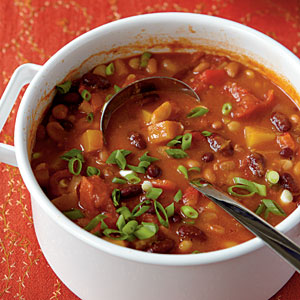
Nothing screams football and fall more than a bowl of homemade delicious chili.  Chili can be a great way to meet your protein and veggie needs and pretty much tastes delicious on just about everything (chili on scrambled eggs is a personal favorite and a delicious brunch meal!).  Plus, chili is a great meal to make for a crowd.  Here is a vegetarian chili recipe that I have made several times and that is a huge hit (even with meat lovers) it tastes totally sinful but is chock full of veggies and fiber-rich beans.  Round it out with some homemade cornbread and you’ve got a taste of culinary victory!

Three-Bean Vegetarian Chili

courtesy of Cooking Light, January 2010

Yield: 6 servings (serving size: about 1 1/2 cups)

Ingredients

  • 2  red bell peppers
  • 3  tablespoons  extra-virgin olive oil
  • 1  cup  chopped onion
  • 2  teaspoons  ground cumin
  • 1  teaspoon  crushed red pepper
  • 1  teaspoon  paprika
  • 1/2  teaspoon  salt
  • 4  garlic cloves, thinly sliced
  • 2  cups  organic vegetable broth
  • 1 1/2  cups  (1/2-inch) cubed peeled butternut squash
  • 1  (28-ounce) can no-salt-added tomatoes, undrained and chopped
  • 1  (15-ounce) can pinto beans, rinsed and drained
  • 1  (15-ounce) can cannellini beans, rinsed and drained
  • 1  (15-ounce) can red kidney beans, rinsed and drained
  • 1/2  cup  thinly sliced green onions

Preparation

1. Preheat broiler.

2. Cut bell peppers in half lengthwise. Remove and discard seeds and membranes. Place pepper halves, skin sides up, on a foil-lined baking sheet. Broil 15 minutes or until blackened. Place pepper halves in a zip-top plastic bag; seal. Let stand 15 minutes. Peel and chop peppers.

3. Heat a Dutch oven over medium-low heat. Add oil to pan; swirl to coat. Add onion; cook 15 minutes, stirring occasionally. Stir in cumin and next 4 ingredients (through garlic); cook 2 minutes, stirring frequently. Add bell peppers, broth, squash, and tomatoes; bring to a simmer. Cook 20 minutes, stirring occasionally. Add beans; simmer 25 minutes or until slightly thick, stirring occasionally. Sprinkle with green onions.

Nutrition Information:

Calories:264
Fat:8.3g (sat 1.2g,mono 5.2g,poly 1.3g)
Protein:9.5g
Carbohydrate:40.9g
Fiber:10.7g
Cholesterol:0.0mg
Iron:4.4mg
Sodium:787mg
Calcium:145mg

Is my Jewish grandmother making me fat?

Last night, D and I went to dinner with a dear family friend who is practically like a grandmother to me.  She is probably one of the most vibrant women I know — at 87 she is full of life — she tap dances several times a week, does pilates, goes to work every day and attends plays, Broadway shows, and has a warm and caring family.  Talk about having it all!

As we were eating, she kept asking D “eat more!  You must be hungry!  Try some of this…are you full?”  It was very cute, and even though D was stuffed from his huge steak, he managed to polish off some of her food too.  But it got me to thinking, most of us do not have the freakish metabolism that D has (seriously it makes me SO jealous!) and can eat a steak that is the equivalent of small football field every night… so what do the rest of us do when we’re put in this kind of situation?  I can’t even tell you how many times I’ve been at dinners or family events and had food pushed on me by family members.  I don’t want to be rude…but I also don’t want to feel guilty about not cleaning my plate.  It’s a delicate balance, but here are some good tips I’ve picked up along the way that quell even the pushiest of relatives!

  • Just say no

If you’re really full or you just don’t want to eat dessert, try just saying a firm “no”.  Not only does this strengthen your own willpower but often a simply no or a “you know what, this meal was so delicious I don’t think I possibly have any more room!”  Let them down nicely, but make sure that the “No” is heard.

  • Honesty is your best policy

Sometimes a simple “no” doesn’t work.  Example: “How can you not want dessert?  Look at you…you are so skinny!  Eat something!”  Let’s face it, a lot of grandparents/relatives/parents get enjoyment out of nourishing their kids.  It comes from a place of love, but sometimes it can be really hard to face, especially when you’re watching what you’re eating and trying to be healthy.  In these instances, it’s best to just be honest.  Say to grandma “You know what, that dessert looks truly amazing, but I’m really trying to watch what I’m eating these days, so I’ll have to pass.”  Or ask for just a sliver if you’re in the mood or some fruit or tea instead.

  • Offer to help out with the cooking/meal planning

A lot of times when I go home, my mom will ask me what food I want to have in the house or want to have for dinner.  I think this is really great because she knows that I’m pretty health conscious (and picky!) so it makes me really feel at home and cared for.  But you don’t need an invitation to do this.  Offer to bring a healthy dish with you such as salad or a light dessert.  Not only does it make your host feel appreciative of your efforts — you can bring something that you know is healthy as part of the meal.

  • Suggest doing activities that don’t just center around food

A lot of times, especially around the holidays, I feel like every family get together is all about the food (as in, let’s all stuff our faces until we have to unbuckle our jeans).  Try to switch things up a bit…suggest a game of football in the park, go for a walk around town, grab a coffee, play frisbee, go for a long bike ride.  These are all fun activities you can do with your family that aren’t centered around food and are great bonding opportunities.

  • Don’t fall into the guilt trap

This is a tough one…but you should never feel guilty for not cleaning your plate.  If you’re full you’re full.  Starving children in Africa would not be able to eat your food anyways — it’s already been made – it’s not like you can ship it over or something!  You do yourself a disservice by not listening to your body and your needs.  You are taking care of yourself by realizing when you’re full and doing something about it!  Even the pushiest grandma can’t argue with that!

1 5 6 7 9